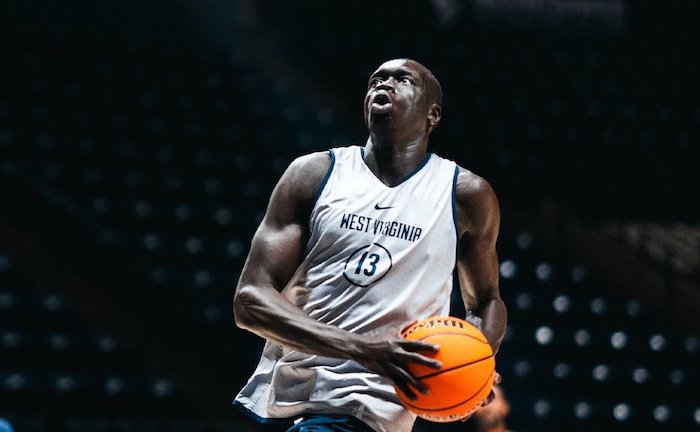
After Akok Akok suffered a major health scare last Friday, cases similar to his are becoming increasingly more common across the sports world.
One of every 50,000 to 80,000 young athletes die each year of sudden cardiac arrest, according to a heart surgeon at the University of Colorado Hospital.
Though the causes remain undisclosed, West Virginia men’s basketball player Akok Akok became one of many to experience a major, non-injury related health scare last week in an exhibition game against George Mason.
The event comes just a few months after the University of Southern California’s Bronny James went into sudden cardiac arrest during practice and the Buffalo Bills’ Damar Hamlin collapsed during an NFL game.
While all three athletes, including Akok, are currently alive and healthy, these sudden health emergencies can and do lead to far worse outcomes.
A 2011 study out of the University of Washington revealed that 273 NCAA athletes suddenly died between 2004 and 2008, with cardiovascular-related deaths standing out as the leading cause. The study goes on to say that over 50% of these cardiovascular related sudden deaths have football and basketball players as their victims.
Male basketball players, specifically, have the greatest risk of suffering sudden cardiac death, according to UAB sports medicine expert and physician, Dr. Sara Gould. Her research suggests that survival rate can be massively improved, despite James, Hamlin, and Akok all surviving their scares.
Dr. Gould says the American Heart Association’s 14-point cardiovascular screening should be performed by a physician as part of an annual physical for young basketball players. 2016 guidelines released by the NCAA recommend that all member institutions do the same.
The guidelines go on to say that, while not recommended by the AHA or the American College of Cardiology, the use of routine, large-scale electrocardiograms (ECGs) is performed by most NCAA institutions that can do so. Specific guidelines are in place for how to conduct ECGs at the collegiate level.
As awareness of these sudden events rises, the NCAA may feel the need to heighten the impacts of these screenings or alter how they are conducted going forward.
In the case of Bronny James, hospital resources were enough to save his life, though 911 calls revealed no doctor or registered nurse was available before dispatchers were called. James has made a near-full recovery and is expected to play his freshman season at USC this year.
As for Akok Akok, causes remain unknown, but the result is the same, as he was released safely to recover in his home just two days after his collapse. While the full extent of his injuries are not known, people athletes dealing with similar circumstances are becoming more and more common.
Photo from WVU Men’s Basketball